Choosing between a hot wallet and a cold wallet is one of the first real security decisions most crypto owners make. The labels sound technical, but the choice is practical: do you need quick access for everyday spending and transfers, or do you need stronger protection for assets you plan to hold for a long time?
This guide explains hot wallet vs cold wallet in plain language for a U.S. audience. It covers how each type works, the main threats, the limits of cold storage (including loss, theft, and damage), a decision framework for spending versus long-term storage, and a hybrid approach many careful users prefer. It does not recommend specific products, invent market statistics, or promise that any setup is “hack-proof.”
What a crypto wallet actually stores
A crypto wallet does not hold coins the way a leather wallet holds cash. It stores the cryptographic credentials—especially private keys—that let you authorize transfers on a blockchain. Your public address is more like an account number others can send to. Your private key is the authority to move funds.
If you lose the private key (or the seed phrase that can recreate it) without a recoverable backup, you can permanently lose access to those assets. That risk applies to both hot and cold setups. The difference is mainly how keys are stored, how often they are exposed to the internet, and which failure modes you accept.
U.S. investor-education materials describe this custody choice as a tradeoff between convenience and exposure to cyberthreats, while also warning that physical cold-storage devices can be lost, damaged, or stolen.
Hot wallet vs cold wallet: core definitions
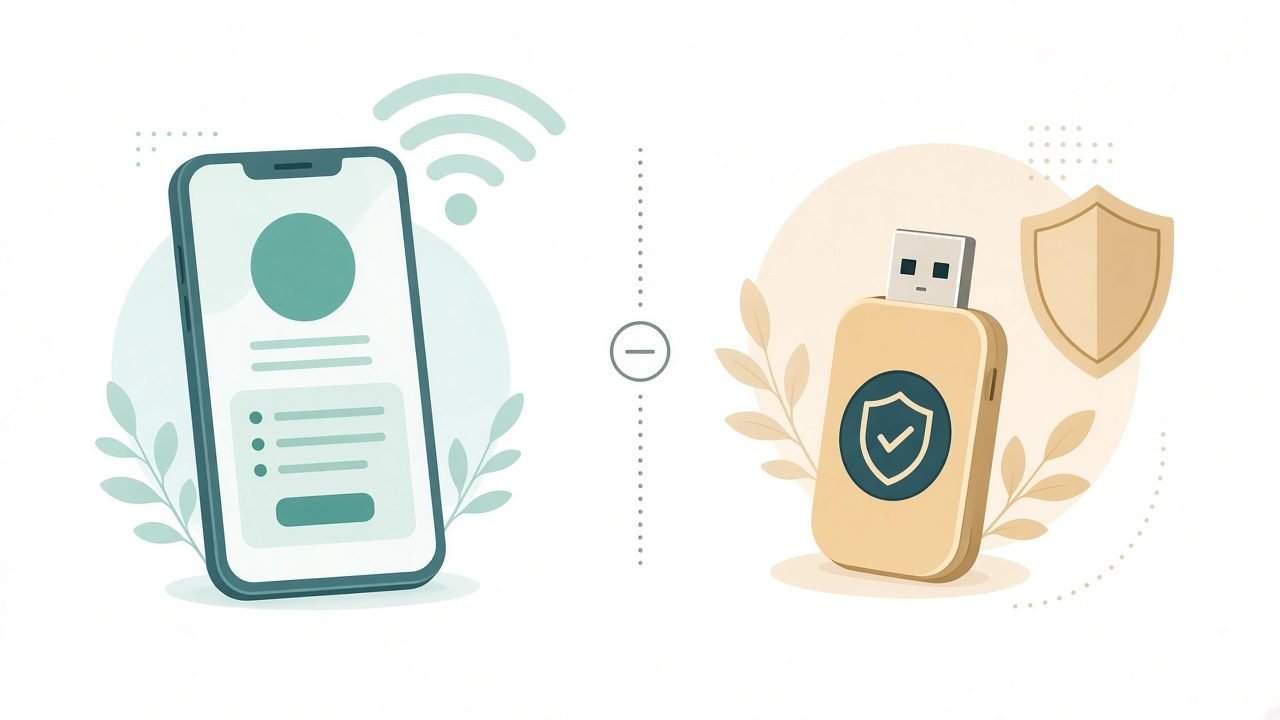
Hot wallet: A wallet connected to the internet. Common forms include mobile apps, desktop apps, and browser or web wallets. Hot wallets are designed for accessibility—checking balances, signing transactions, interacting with apps, and moving funds quickly.
Cold wallet: A wallet that keeps private keys offline or minimizes ongoing internet exposure of those keys. Common forms include hardware wallets, air-gapped computers used carefully for key management, and offline backups such as seed phrases written or stamped onto durable media. Cold storage is intended for higher-security, lower-frequency access.
NIST’s blockchain guidance uses a similar framing: hot wallets as internet-connected and highly accessible (generally for lower-value or in-transit assets), and cold wallets as offline or specially protected setups meant for higher-value assets at rest, often requiring a physical action or local authentication before a transaction is signed.
Important nuance: “cold” does not automatically mean “safe,” and “hot” does not automatically mean “reckless.” Security depends on how you generate keys, how you back them up, what you click, who controls the device, and whether you keep more value online than you can afford to lose.
Quick comparison table
| Factor | Hot wallet | Cold wallet |
|---|---|---|
| Internet connection | Connected (or regularly online) | Keys kept offline / air-gapped or on dedicated hardware |
| Best everyday fit | Spending, trading staging, frequent transfers | Long-term holding, larger balances |
| Main convenience | Fast signing and app access | Stronger isolation from remote malware |
| Main cyber risk | Phishing, malware, malicious apps, account takeover | Fewer remote paths; still vulnerable if seed/device is exposed |
| Main physical risk | Device theft if unlocked or poorly protected | Loss, theft, damage, fire/flood, inaccessible backups |
| Recovery responsibility | You (self-custody) or a custodian (third-party) | Usually you—backups become critical |
| Typical friction | Lower | Higher (setup, confirmations, transfer steps) |
| Cost profile | Often free software; network fees still apply | Device purchase plus network fees; backup materials |
| Good hybrid role | “Working balance” only | “Savings vault” for the rest |
Decision framework: everyday spending vs long-term storage
Use purpose first, not brand names.
1) Everyday spending and frequent transfers → lean hot (with limits)
Choose a hot wallet—or the hot side of a hybrid setup—when you regularly need to:
- Pay someone quickly
- Move funds between an exchange and self-custody
- Interact with apps that require frequent signatures
- Keep a small “checking account” balance available
Practical rule of thumb: treat a hot wallet like cash in your pocket or a debit card balance. Keep only what you expect to use soon. Do not store your entire portfolio there just because the app is convenient.
Hot-wallet hygiene that matters more than the logo on the app:
- Download only from official sources you verify carefully
- Enable strong device passcodes and, where available, biometric locks
- Use unique passwords and multi-factor authentication on related accounts
- Review every transaction detail before signing
- Separate a “spending” wallet from a “savings” wallet
- Assume browser extensions and unknown dApps expand your attack surface
2) Long-term storage and larger balances → lean cold
Choose cold storage when you intend to:
- Hold assets for months or years
- Keep amounts you would be devastated to lose
- Reduce exposure to phishing sites, malware, and remote account takeover
- Create a deliberate pause before moving large sums
Cold storage is not about never using crypto. It is about making large moves intentional. You accept more friction in exchange for fewer always-on internet attack paths.
Before you put meaningful value in cold storage, confirm you can answer “yes” to all of the following:
- I generated or verified the wallet setup in a trustworthy way
- I have a recovery plan that does not depend on one fragile copy of a seed phrase
- I understand how to send a small test transaction before moving a large amount
- I know who in my household could recover access if something happened to me (estate planning matters)
- I am not photographing my seed phrase or storing it in cloud notes, email, or screenshots
3) Mixed needs → use a hybrid approach (recommended for many users)
Most people are not purely “spenders” or purely “HODLers.” A hybrid model splits roles:
- Cold vault: majority of holdings, infrequently accessed
- Hot working balance: enough for near-term spending, fees, and opportunistic moves
- Optional staging step: when you need funds, transfer from cold to hot in planned amounts—not everything at once
This mirrors how people already manage money offline: savings account versus checking account. The point is not perfection. The point is reducing the blast radius of one mistake.
Threats that matter for hot wallets
Hot wallets are convenient because they live where the internet lives. That same property creates recurring risks.
Phishing and social engineering. Fake websites, fake support agents, malicious QR codes, and lookalike apps try to trick you into revealing a seed phrase or approving a harmful transaction. No legitimate support person needs your seed phrase.
Malware and device compromise. Infostealers, clipboard hijackers, and remote-access tools can target wallets on phones and computers. If the device is compromised, software wallet protections can fail.
Malicious or trojanized apps. Security advisories aimed at crypto-related organizations have repeatedly warned about unverified downloads and third-party software that may be trojanized. Retail users face a version of the same problem: sideloaded APKs, fake browser extensions, and “too good to be true” wallet helpers.
Approval and signature traps. Modern scams often do not steal a seed phrase at all. They ask you to sign a transaction or token approval that drains funds later. Hot wallets make signing easy—which is exactly why careful review matters.
Account and exchange adjacency. Many people keep funds on exchanges or in custodial apps that are internet-facing by design. Those environments may use hot wallets operationally. Custodial failure, account takeover, or platform insolvency is a different risk category from self-custody malware, but it is still part of the hot-access world.
Sync and backup mistakes. Cloud backups of seed phrases, screenshots, password-manager notes shared carelessly, or email drafts create silent exposure. The wallet can be “hot” even when you think you were only making a convenience backup.
Hot wallets are not “bad.” They are high-availability tools. High availability expands the set of ways something can go wrong.
Threats and limitations of cold wallets
Cold storage reduces remote cyber exposure. It does not eliminate risk. In some cases it simply changes the risk type.
Physical loss
If you lose a hardware device and cannot recover from a seed phrase backup, the assets may be inaccessible forever. Losing the device alone is often recoverable—if the seed phrase backup is intact and private. Losing both is catastrophic.
Theft
A stolen hardware wallet may still be protected by a PIN, passphrase, or similar control, depending on the product and your setup. But theft of an unprotected seed phrase backup is effectively theft of the funds. Burglary, dishonest acquaintances, and targeted physical attacks are real considerations for high-value holders.
Damage and environmental failure
Fire, flood, corrosion, discarded paper, faded ink, and failed storage media can destroy backups. “Offline” does not mean “indestructible.” Durable backups and geographically thoughtful storage matter more as balances grow.
Operational and human error
People send funds to the wrong address, reuse compromised recovery methods, enter seed phrases into fake “verification” sites, or create a wallet while a computer is already infected. Cold storage cannot save you from confirming the wrong destination or typing a seed into a phishing page.
False sense of security
Buying a device and leaving the seed phrase in a desk drawer, photo album, or cloud folder is not strong cold storage. The weakest copy of the secret defines your security.
Accessibility and inheritance gaps
If only one person knows how recovery works, illness, travel, or death can strand assets. Cold storage strengthens confidentiality; it can also increase single-person failure risk if you never plan for recovery by trusted heirs under clear instructions.
Convenience pressure that pushes people back online
When cold storage is too painful, users often move large balances back into hot wallets “just for now.” That temporary move is a common point of loss. Design your process so routine needs do not require unlocking the entire vault.
SEC staff investor education explicitly notes the hot/cold convenience-versus-cyberthreat tradeoff and warns that physical cold-wallet devices can be lost, damaged, or stolen—potentially causing permanent loss of access.
How to choose: a practical checklist
Ask these questions in order.
- What is this balance for? Spending this month, or holding for years?
- How often will I move it? Daily/weekly favors hot; rare moves favor cold.
- How painful would total loss be? If the answer is “life-changing,” prioritize cold and backup discipline.
- Am I comfortable being fully responsible for keys? If not, study third-party custody tradeoffs carefully rather than improvising.
- Do I have a recovery plan that survives device failure? If not, fix that before increasing balances.
- Can I keep secrets offline? If you habitually screenshot everything, fix that habit before relying on self-custody.
- Do I need a hybrid split? For most people with more than a small spending balance, yes.
Building a sensible hybrid setup
A durable hybrid approach usually looks like this:
Step A — Define buckets. Decide a spending ceiling for your hot wallet (an amount you could lose without financial ruin) and keep the remainder in cold storage.
Step B — Separate wallets by role. Do not reuse one address for everything if that blurs your process. A clear spending wallet and a clear vault wallet reduce mistakes.
Step C — Practice with tiny amounts. Before migrating meaningful funds, test receive, send, and recovery procedures with amounts you can afford to lose during learning.
Step D — Harden the human layer. Write down (offline) how you recover access. Never share seed phrases. Be skeptical of urgent “support” messages. Verify addresses through a second channel when sending large amounts.
Step E — Rebalance intentionally. Refill the hot wallet from cold storage on a schedule or when the working balance runs low. Avoid impulsive full unlocks.
Step F — Review after life changes. New phone, new computer, move to a new home, relationship changes, or a large portfolio increase should trigger a security review.
Self-custody vs third-party custody (related, but not the same)
Hot vs cold describes connectivity and key-exposure patterns. Self-custody vs third-party custody describes who controls the keys.
- You can self-custody in a hot wallet or a cold wallet.
- A custodian or exchange can also use hot wallets, cold wallets, or both behind the scenes.
If someone else holds the keys, your risk includes platform security, operational controls, insolvency, account recovery policies, and whether assets are commingled or reused. If you hold the keys, your risk centers on your own operational security and backup practices. Neither model removes the need for careful research and skepticism.
Common myths to ignore
“Cold wallets can’t be hacked.” Wrong. People get tricked into revealing seeds, buy tampered devices from unofficial sellers, or approve bad transactions after connecting a device to a compromised computer.
“Hot wallets are only for beginners.” Wrong. Experienced users keep hot wallets for daily operations. Expertise is knowing what not to leave there.
“A paper backup in one place is enough.” Often too fragile. One house fire or one theft can end the story. Diversify backup durability and locations thoughtfully—without creating many careless copies.
“If I use a hardware wallet, I can ignore phishing.” No. Hardware wallets help protect keys, but you can still sign a malicious transaction if you do not verify what you are approving.
A risk-aware bottom line
For hot wallet vs cold wallet, the best choice is usually not an either/or slogan. Match the tool to the job:
- Hot wallets excel at everyday spending and frequent activity—if balances stay limited and device hygiene is strong.
- Cold wallets excel at long-term storage—if you respect physical risks and maintain recoverable, private backups.
- A hybrid approach gives most U.S. retail users a workable balance: convenience for small amounts, isolation for larger holdings.
Security is less about finding a magic product and more about reducing irreversible mistakes. Start with clear roles for your money, keep secrets offline, practice recovery before you need it, and move only what each wallet is meant to hold.
FAQ
Is a hot wallet or cold wallet safer?
Cold wallets are generally safer against remote cyberthreats because private keys are not kept continuously online. Hot wallets are more exposed to phishing, malware, and malicious apps. Cold wallets introduce stronger physical risks—loss, theft, and damage—so “safer” depends on your threat model and backup discipline.
Can I use both a hot wallet and a cold wallet?
Yes. Many people use a hybrid approach: a hot wallet for everyday spending and a cold wallet for long-term storage. Transfer only what you need from cold to hot when you plan to use funds.
What happens if I lose my cold wallet device?
If you still have a secure seed phrase (recovery phrase) backup, you can usually restore access on a new compatible wallet. If both the device and the recovery backup are lost, access to the assets may be permanently gone.
Are exchange accounts hot wallets?
Exchange and custodial accounts are internet-accessible by design and often rely on institutional hot/cold systems you do not directly control. From a retail user’s perspective, they behave like hot, third-party custody: convenient, but dependent on the platform’s security and solvency.
Is a seed phrase the same as a private key?
Not exactly. A seed phrase is a human-readable backup that can regenerate wallet keys. It is effectively as sensitive as the private keys themselves. Anyone who obtains your seed phrase can typically recreate the wallet and move funds.
Should large long-term holdings stay in a hot wallet?
Generally no. If you do not need frequent access, cold storage (or a carefully designed custodial arrangement after due diligence) is usually the better fit for larger long-term holdings. Keep hot-wallet balances limited to near-term needs.